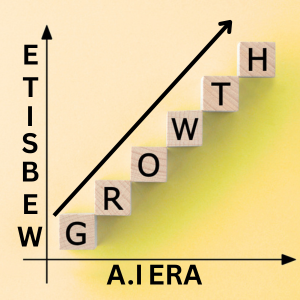
Website growth has emerged as the most dependable long-term success factor in the AI era amidst the constantly changing digital landscape. Even as artificial intelligence keeps updating search, content, and user behavior, the role of the website has not vanished yet. Rather, it has become more central, more strategic, and more valuable than ever before we ever imagined.
Brands, which were once significantly reliant on social platforms, paid campaigns, or algorithm, driven visibility, are now coming to terms with a difficult truth. Attention is fleeting, but ownership leads to stability. Consequently, the businesses that consider their website as a primary growth asset are in a better position to become more flexible, increase their level of activity and maintain their results even if digital trends continue to change.

Table of Contents
- The AI Era Has Redefined Digital Growth
- Why Platforms Alone No Longer Guarantee Growth
- Website Ownership vs Rented Digital Spaces
- The Website’s Role in the Modern Buyer Journey
- Structure Matters More Than Ever
- Content That Supports Decisions, Not Just Traffic
- The Growing Importance of Trust and Credibility
- Why WordPress Remains a Strategic Choice
- Integrating SEO, Content, and Automation
- Measuring Growth Beyond Vanity Metrics
- Conclusion
The AI Era Has Redefined Digital Growth
AI has changed how people search, evaluate, and make decisions. Search engines now summarize answers. Social platforms filter reach aggressively. Recommendation systems decide what users see before they actively look for it.
Digital expansion is not about simply being present everywhere anymore. It is more about being clear, trustworthy, and easy to reach at the exact time. If users desire to check information, compare options, or make a decision, they still turn to websites.
Therefore, while AI influences discovery, the website controls conversion.
Why Platforms Alone No Longer Guarantee Growth
Social media and advertising platforms still continues to play an important role. However, they are not constant growth engines on their own. Algorithms change without any prior notice. Organic reach declines over a period of time. Advertising cost in increaseasing steadily.
Businesses that depend on social platforms often have unpredictable outcomes. One month they achieve strong results, and the next month it demands higher budgets for the same result. This lack of control creates long-term risk.
In contrast, website growth provides consistency. When traffic sources fluctuate, a strong website ensures that interest can still be captured, nurtured, and converted effectively.
Website Ownership vs Rented Digital Spaces
One of the most important differences in the AI era is between owned and rented digital assets. Social platforms, marketplaces, and ad networks are rented. Websites are owned.
Ownership means control over content, structure, data, integrations, and user experience. It also means independence from platform-specific rules and limitations.
Because of this, businesses that invest in their websites build equity over time. Each improvement compounds value, instead of resetting with every algorithm update.
The Website’s Role in the Modern Buyer Journey
AI has shortened the awareness phase of the buyer journey. Many users now arrive at websites already informed. They are no longer browsing casually. Instead, they are validating decisions.
At this stage, the website must answer key questions clearly and confidently. It must explain value, establish credibility, and guide the next step without friction.
When websites fail to support this moment, even the best marketing efforts lose effectiveness.
Structure Matters More Than Ever
Design attracts attention, but structure enables growth. In the AI era, struture of the website plays a critical role in guiding users logically through information.
A well-structured website organizes content around user intent or interest. It predicts questions, reduces confusion, and simplifies decision-making. This structure also supports SEO, accessibility, and analytics.
Businesses that prioritize structure over surface-level design improvements consistently achieve better outcomes.
Content That Supports Decisions, Not Just Traffic
Content remains essential, but its purpose has changed. Rather than running behind volume, effective content now focuses on relevance and usefulness.
A decision that is focused on content includes explanations, comparisons, case insights, and practical guidance. It helps users feel confident rather than overwhelmed.
Search engines themselves reinforce this shift. Google’s guidance on helpful content emphasizes value, experience, and clarity over keyword manipulation
https://developers.google.com/search/docs/fundamentals/creating-helpful-content
When content is aligned with website structure, it becomes a long-term asset rather than a temporary traffic play.
The Growing Importance of Trust and Credibility
AI has increased skepticism. Users are exposed to more data and information than ever, which makes it difficult to earn trust. As a result, credibility signals matter deeply.
Websites now act as proof centers. They communicate authority through clarity, transparency, and consistency. Elements such as clear messaging, professional presentation, and helpful resources all contribute to trust.
This trust is difficult to establish on rented platforms but easier to build on owned websites.
Why WordPress Remains a Strategic Choice
As businesses seek flexibility and control, WordPress continues to stand as a practical foundation for website growth. Its adaptability allows companies to improve without being restricted by proprietary limitations.
WordPress has customization, integrations, scalability, and content management without locking businesses into fixed ecosystems. For organizations aiming to build a long-term growth system, this flexibility is a strategic advantage.
If you more insight into structured WordPress-based development, visit our page
https://digiwinventure.com/wordpress-website-developer/
Integrating SEO, Content, and Automation
In the AI era, isolated tactics no longer work. Website growth depends on the alignment of SEO, content, and automation.
SEO attracts relevant intent. Content builds understanding and trust. Automation gives timely follow-up and consistency. When these elements work together, the website becomes an active growth engine.
This system-based approach allows businesses to scale efficiently while maintaining quality. If you want to know more about it, and how it can be done efficiently, you can contact us at the link:
Contact us Digiwin Venture
Measuring Growth Beyond Vanity Metrics
Another significant benefit of a website-centric strategy is enhanced measurement. Rather than solely concentrating on likes, impressions, or clicks, companies are able to measure substantive metrics.
Such metrics encompass conversion paths, engagement depth, lead quality, and time to decision. Because the website centralizes data, insights become clearer and decisions become more informed.
As AI reduces the reliability of surface-level metrics, this clarity becomes increasingly valuable.
Conclusion
In the AI era, growth is no longer driven by visibility alone. It is driven by ownership, structure, and strategic intent. This is why website growth is the most important factor in building a long-term digital success.
Even as platforms change and AI keeps progressing, a good website will still be effective. It gets the purpose, creates trust, and helps people make up their minds, changes do not matter.
Companies that treat their websites as development resources instead of just pages get steadiness, openness, and lasting worth in a digital world that is getting more and more complicated.